Showing posts with label Meat. Show all posts

Wednesday, May 22, 2013

Stir-fried beef and green asparagus

Stir-fries are a must for those of us who are often faced with the dilemma of having to (wanting to!) cook proper meals with little time on our hands. Stir-fries are easy, quick, yummy and healthy! Who wants to eat a ready-made meal if you can have tender beef, crunchy asparagus all mixed with a sauce of teriyake, lime juice, fresh ginger and hot chilis? Give it a try, I promise it's not difficult!

And for those with little or no stir-frying experience: this is all about fast cooking at high temperatures. Think "The Fast and The Furious" rather than "Sense and Sensibility". First and foremost this means that need to have everything ready. You don't want to start chopping ingredients in the middle of this. Also, remember that this is going to be very quick, so if you need to set your table, cook some rice, open a bottle of wine, you should all of this in advance (or, even better, delegate).


Ingredients (serves 2):

2 spring onions
2 tablespoons of finely fresh chopped ginger
2 cloves of garlic
1 red chili
5 tablespoons of teriyaki sauce
2 tablespoons of soya sauce
1 tablespoon of dark sesame oil
1 tablespoon of lime juice
1 teaspoon of cornstarch
2 teaspoons of sugar
350gr rumpsteak
500gr green asparagus
salt, pepper, extra sesame oil

Preparation

1. Clean and finely slice the spring onion. Peel the garlic and chop finely. Cut the chili in rings (I tend to leave the seeds in to add that extra spice). Remove the fat from the steak and slice diagonally into 1/2 cm stripes. Remove the woody ends from the asparagus and cut into 2-3cm pieces. 

2. Mix the ginger, garlic, chili, teriyaki sauce, soya sauce, sesame oil, sugar, lime juice and blend in the cornstarch. Set aside.

3. Heat a wok to high heat, add a bit of sesame oil and fry the asparagus. After about 2 minutes start adding spoonfuls of water one at a time (4-5 in total), each time allowing the liquid to boil away before adding more. The asparagus should still be quite crunchy. Remove the wok from the heat.  

4. Heat a large frying pan to a very high heat, adding a tablespoon of sesame oil. Once the pan is searingly hot (don't worry if it starts to smoke a little) fry the meat very briefly, just until it starts to brown slightly. The idea is not to cook the meat through (it will only end up getting tough), so just leave it in the pan for about 15 seconds on each side (I recommend you do this in batches). Remove the cooked meat and place it in the wok.

5. Once the meat is all done, return the wok to the stove and heat everything up (don't be shy on the heat, you want this to be sizzling). Add the sauce. mix well and wait until it starts to bubble away. The cornstarch will make the sauce thicken slightly and it will stick to the meat and the asparagus. This should start happening after a few minutes. Sprinkle with some spring onions and serve immediately.


Recipe adapted from: www.esssen-und-trinken.de

Tuesday, March 12, 2013

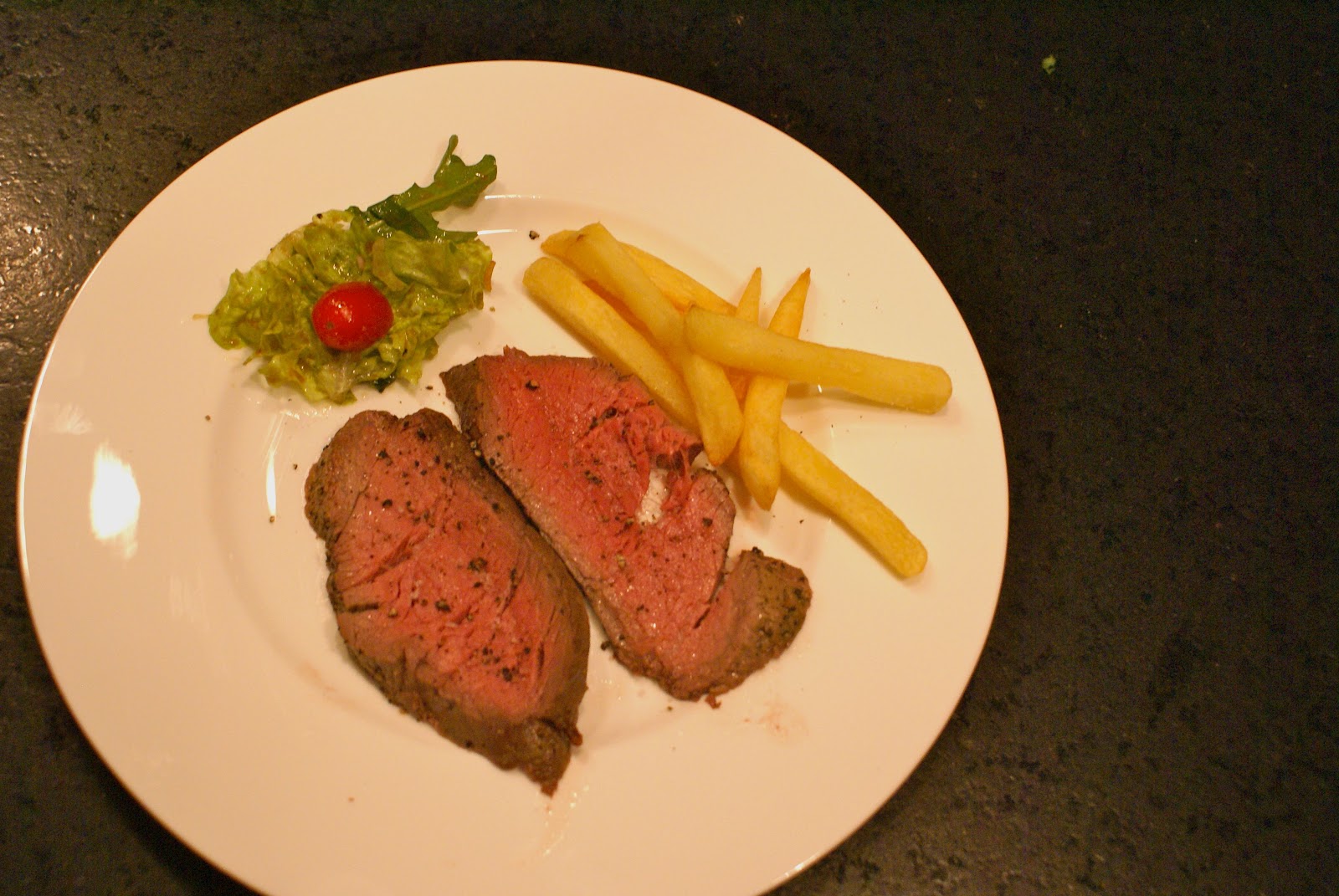
The perfekt filet steak

This is definitely one for the carnivores!

A good filet steak is actually not difficult to make, but you need to make sure that you use only top quality ingredients. No point in trying to safe a few quid here, all you are going to end up with is a dry piece of meat. So go ahead and splurge a bit, it'll be worth it.   


As always when it comes to meat, make sure that you remove it from the fridge a good 2 hours before you start cooking. This gives the meat time to warm up a bit and will prevent the meat from ending up charred on the outside while raw on the inside. 

For this recipe I use filetsteaks of 200-250gr a piece, but you can of course use bigger or smaller pieces as desired. Just tie each steak with a bit of string to make sure that it keeps its shape, rub it with a bit of olive oil and season with salt and pepper.  


Heat up your oven to a temperature of 160°C. Place a pan on your stove and heat it up to a high temperature (don't worry if the pan starts smoking slightly, this is what you want). When the pan is hot, sear the meat for about 1 minute on each side. It will be noisy and there will most likely be quite a bit of smoke, but that is entirely normal, so no need to panic. When the time is up, place the meat in the oven (it's best to use a shallow oven-dish for this) and insert a meat thermometer. It will take roughly 20-30 minutes for the meat to reach the desired core temperature of 55°C (medium), depending on the size of the steaks. Remove the meat from the oven, wrap it (loosely) in some aluminum foil and allow to rest for a good 10mins. It will be tempting to take short-cuts here...don't!

Tuesday, February 26, 2013

Lovely beef stew for the last cold winter days


It's been freezing outside and it's pretty clear that winter is here to stay for a bit longer. I can't wait for spring to arrive, but I figure I might as well make the most of the prolonged cold and cook some last wintery dishes. Stews of any kind are clearly part of this, so here is my favorite beef stew. It's a slightly simplified version of the French "Boeuf Bourguignon"and is served with dumplings and, if so desired, a small side salad.


Ingredients (serves 6):

1,4kg stewing beef (cut into 1 1/2 cm cubes)
250gr small shallots or onions
300gr carrots
300gr small brown mushrooms
150gr bacon, cut into small cubes
2 tablespoons of tomato concentrate
2 tablespoons flour
1l beef stock
500ml red wine 
2 bay leaves
2 cloves of garlic
fresh thyme (4-6 sprigs)
1 teaspoon of sugar
1 tablespoon of paprika powder

Preparation:

1. Peel the shallots and the carrots. Cut the shallots into halves and the carrots into medium size cubes.  Brush any dirt off the mushrooms and cut them into half.  


2.  In a large casserole, fry the beef and the bacon in 3-4 batches, allowing the meat to brown just slightly. Dust each batch with a bit of flour (2 tablespoons in total) before removing from the saucepan. When the meat is done, remove and set aside. Now put the carrots, shallots, and mushrooms in the casserole and fry for a few minutes until the onions start to soften slightly. 

3. Add the beef and stir in the tomato concentrate, sugar, paprika and some salt and pepper. Mix well before adding the garlic, bay leave and the thyme. Pour in the wine and the stock. Bring to a simmer and allow to cook on medium heat for 2 1/2 to 3 hours until the meat is nice and tender. I recommend leaving the lid on for the first 1 1/2 hours and removing it for the remainder of the time. 

4. When the meat is done, remove the bay leaves and the thyme, season with salt and pepper and, if necessary, add some pieces of cold butter to bind the sauce (in all likelihood this won't be necessary).  

Wednesday, January 16, 2013

Indian extravaganza: Lamb- and Chicken Curry

Making Indian curry is actually fairly straightforward and you can follow pretty much the same steps no matter what kind of meat (or fish) you are using. The only thing that will need to adjust is the cooking time (longest for lamb and beef, shortest for prawns), the curry spice mix that you are using, and the amount of chili you want to use. Naturally you can put together the spice mix yourself (usually a combination of ground cumin, ground coriander, chili, tumeric, ground ginger, garlic, and a few other things), but I decided to make my life simpler by purchasing a high quality ready mix*. In this particular case, I am using a spicy curry for the lamb and a milder version for the chicken.


Ingredients (serves 4 in total):

500gr Chicken breast (alternatively you can use drumsticks)

500gr lamb (from the leg)
1 large red onion, chopped finely

2 tablespoons of grated ginger
2 red chilis, sliced
4 cloves of garlic, chopped finely

2 cans of coconut milk
1 handful of chopped coriander
1 large can of peeled tomatoes

Curry spice mix

Preparation

1.  Starting with the lamb curry  (since this takes longest), cut the meat into 2-3cm cubes. Heat some oil in a saucepan and add half of the onion, about 3/4 of the chili, half the ginger and half the garlic. Fry gently until the onion starts to soften. Add about 1 1/2 tablespoons of the curry mix, continue to fry for another 2-3 minutes, then add the meat. Stir will until the meat is evenly covered, then add the coconut milk (1 can) and 3 peeled tomatoes (without the juice). Season with some salt and pepper and simmer with a closed lid for about 1 1/2 hours until the meat is soft.


2. For the chicken curry, you follow pretty much the same steps, the main difference being that I used a milder curry mix and less chili. Also, assuming that you are using chicken breast, the cooking time will be much shorter (about 20 mins once the meat is in). In case you are using chicken thighs or drumsticks (with bones), the cooking time will be longer, roughly 45mins, 


3. Once the meat is soft and tender, season to taste and sprinkle with some coriander.

(*) In the UK they usually sell these in the form of a paste rather than a dry mix. In case you are using such a paste, simply start by frying the onion, chili, ginger and garlic briefly, add the paste and continue to fry slowly until the onions are soft. Add the meat and fry for another 10 minutes, stirring frequently. Then add the coconut milk and cook until the meat is nice and tender.

Friday, January 4, 2013

Saltimbocca with sweet potato mash

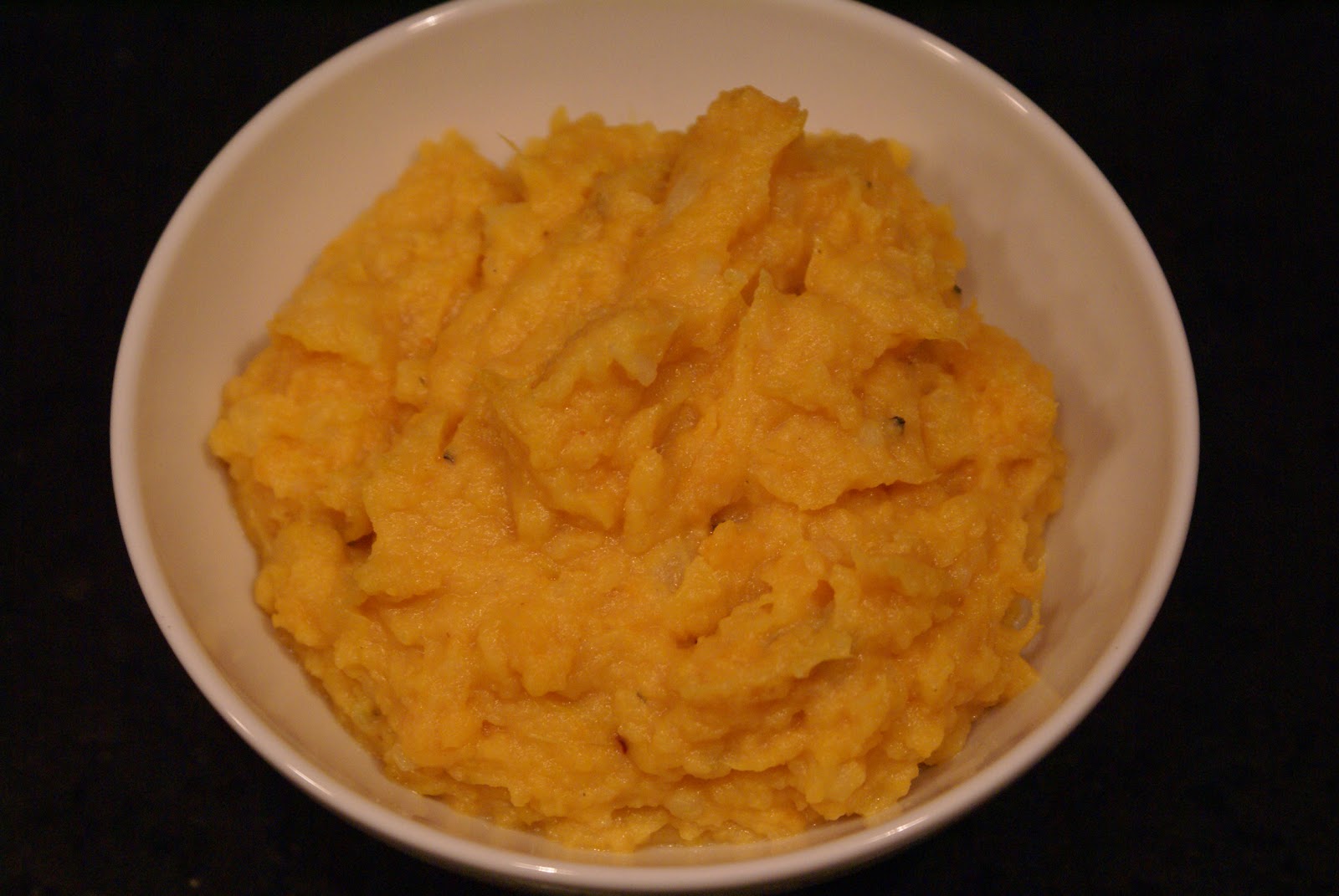
In Italy saltimbocca is often served with polenta, but since I am not a huge fan of the later, I prefer to serve it with sweet potato mash...which I love! The saltiness of the Parma ham harmonizes perfectly with the rich sweetness of the mash. I serve this with braised cabbage or spinach (recipes to follow).

The biggest challenge when cooking this recipe is to keep the meat nice and tender. For one this obviously requires high quality meat, so this is not a good place to try to safe money. Equally important, however, is not to overcook the scallopini. Give them just a minimum of time in the frying pan and trust me, they will be done. 


Ingredients (serves 2)


3 veal scallopini (300gr)
3-4 slices of Parma ham
Handfull of sage leaves (fresh!)
1 tablespoon of flour
Butter or olive oil
200ml white wine 

For the mash:
200gr potatoes
400gr sweet potatoes
1 teaspoon of cayenne
2 tablespoons of butter

125ml milk or cream


Preparation: 


1. First, place the scallopini between two sheets of cling film and pound into thin slices. Cut into 2 or 3 pieces each. Sprinkle the meat with a bit of salt (careful here, the ham is salty too) and pepper. Then place one sage leave and half a slice of Parma ham on each piece of meat, securing with a toothpick.


2. Dust the scallopini with some flour and saute them in some butter or olive oil (medium heat). Since the meat is very thin, this won't take long and you can remove the scallopini after 1-2 minutes on each side. If you are cooking for 3 or more, I recommend you do this in batches.


3. Once the veal has been cooked put it on a plate and set aside. Now add the white wine to the pan. Let the wine bubble away for a few minutes before adding 1-2 tablespoons of cold butter, stirring in well (the butter will bind the sauce, giving it a smooth almost creamy consistency). Season to taste with salt, pepper and a sprinkle of sugar (the butter will take the edge of the acidity of the wine, but you may need some sugar in addition to this). You can also add some fresh sage leaves if you want to.  Before serving, return the meat to the pan and allow to reheat in the sauce for a few minutes.


4. For the mash, simply peel the potatoes and cut in to 2cm cubes. Cook in salted water until soft. Drain. Add the butter, milk (or cream), the cayenne, salt and pepper and mash using a fork until it has reached a creamy but still slightly chunky consistency.


Wednesday, December 12, 2012

One for the carnivores: Filet of Beef on Salt


A good filet of beef is pretty hard to top. While it doesn't have the intensity of flavor a Rib-Eye can offer, properly prepared it will meld in your mouth. But you need high-quality ingredients. This is not a good time to try to safe money - if you are going to cook a filet of beef, make sure you get the best meat available. Assuming that you do, there is no need to get overly fancy in terms of preparation, good ingredients speak for themselves. The beauty of this particular recipe is that it's 100% fail-safe. It always works. I promise!


Ingredients (for 4)
2x 400-500gr filet of beef (thick end)
500gr coarse sea salt


Preparation:

1. Whenever you cook meat, make sure that you take it out of the fridge a good two hours before you are going to start. This is particularly important here because the actual preparation time is so short. Once the meat has warmed to room temperature, rub it with a bit of sea salt, black pepper, and olive oil. 

2. Heat your oven to 250°C. 

3. Mix the salt with a couple of tablespoons of water and evenly spread it on an oven tray (I used a pizza tray here). The surface area needs to be big enough to place the meat on it.


4.When the oven has reached temperature, place the tray with the salt (NOT the meat) inside. After 20mins the salt will have formed a hard, searing hot crust. Now you place the filet on the salt.

5. After 9 Minutes (exact), you turn the meat around and leave it in the oven for another 9 minutes. Don't experiment! I know it seems short, but trust me! When the time is up, take the meat out of the oven and loosely wrap it in some aluminum foil. Allow to rest for 15min (no short-cuts here!). The meat will now be perfect...medium on the sides, medium-rare towards the middle.